By Matthew Cimitile, University Communications and Marketing
The American Psychological Association (APA) Ethics Committee has recognized USF Psychology Professor Tiffany Chenneville with the 2025 Lifetime Award for Accomplishments in Ethics Education. The annual award is given to a psychologist who has made outstanding contributions to ethics education across all fields of psychology and demonstrated lifetime accomplishments in the area.
“I am both thrilled and surprised at this recognition. It is a huge honor,” said Chenneville, who is also the Marie E. and E. Leslie Cole Endowed Chair in Ethics at USF St. Petersburg “To be voted on by the APA Ethics Committee, nominated by a respected colleague and see the letters of support from those I have worked with and former students make it that much more special.”
Chenneville has been a professor at USF since 2004. Her research focuses on pediatric and adolescent HIV. She has published extensively on ethical issues related to HIV, including the capacity of children and adolescents to participate in medical treatment and research, the confidentiality versus duty to protect dilemma facing mental health professionals treating clients with HIV and HIV criminalization. She has also published extensively on topics related to professional and research ethics outside the area of HIV.
Chenneville contributes to ethics programs and research locally and internationally. She was part of a $1.2 million program funded by the National Institutes of Health Fogarty International Center to help build the infrastructure for research ethics committees in medical schools in India. Through a Fulbright Specialist Award, she also conducted training and consultation on ethical issues related to HIV research and treatment among minors at the University of Witwatersrand’s perinatal HIV research unit in South Africa.
In 2020, she was named the Marie E. and E. Leslie Cole Endowed Chair in Ethics. In this position, she organizes and hosts an annual public symposium in the field of ethics and engages in research and community initiatives on the subject.
“In considering this year's candidates, the committee was particularly impressed by the extraordinary contributions you have made to ethics education and research on the ethical practice of psychologists,” said Nancy Huag, chair of the APA Ethics Committee and a professor at Stanford University, in an email letter announcing the award. “This decision reflects the remarkable depth of commitment to ethics education in our field and recognizes that you have made significant impacts worthy of recognition.”
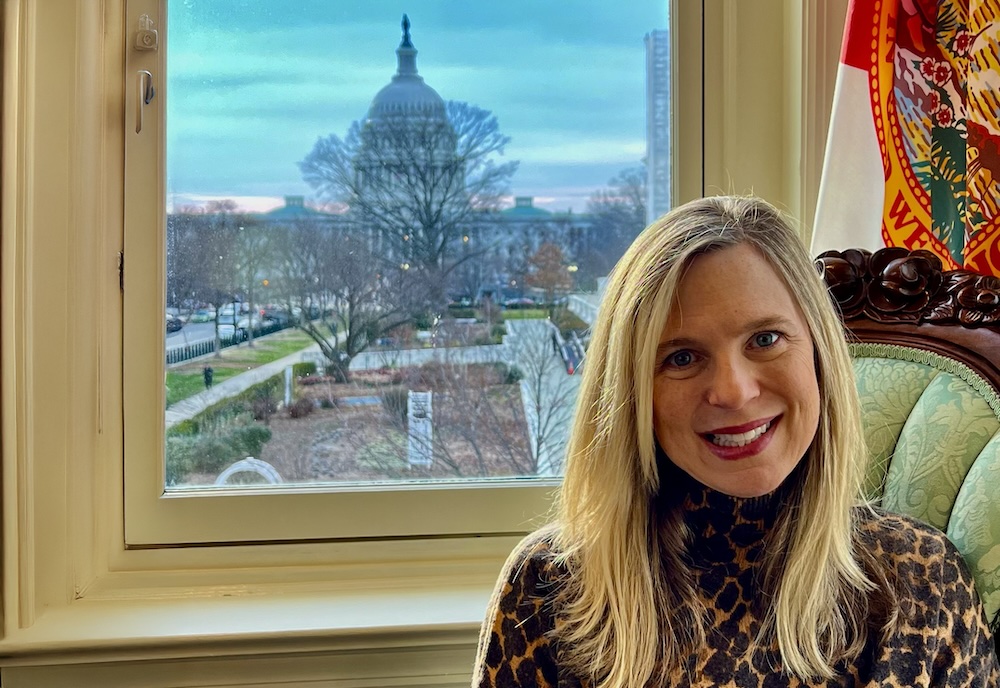
In recent years, Chenneville has taken part in multiple, year-long fellowships in Washington D.C., utilizing her expertise in service of public policy.
In 2023, she was awarded the APA Springfield Policy Congressional Fellowship, which allowed her to work with Senator Ron Wyden’s office on policies to advance the health and well-being of LGBTQIA+ populations. In 2024, she was the recipient of the American Association for the Advancement of Sciences (AAAS) Executive Branch Science and Technology Policy Fellowship. Chenneville joined the scientific integrity team at the National Science Foundation, working to disseminate and ensure adherence to the agency’s scientific integrity policy, with the overall goal of developing greater public trust in science.
“I have always had a fascination with the law, and law and ethics go hand in hand, so it naturally became a focus of my research as a psychologist,” Chenneville said. “These fellowships were very much aligned with this long-standing interest and built upon my career work in this space.”
Chenneville will be presented the lifetime achievement award at the annual APA Ethics Committee meeting on December 11, 2025.