By Arielle Stevenson, University Communications and Marketing
In 1776, rebellion spread through Britain’s mainland colonies. Royal authority was being challenged from Massachusetts to Georgia. In Philadelphia, delegates approved the Declaration of Independence, creating the United States of America.
Across the 13 colonies, Americans debated and fought over loyalty and liberty, leading to revolution.
Further south, in Florida, the story looked very different.
Florida hadn’t even been British 13 years earlier. It wasn’t until the conclusion of the Seven Years’ War that Britain acquired the territory from Spain and then divided it into two colonies.
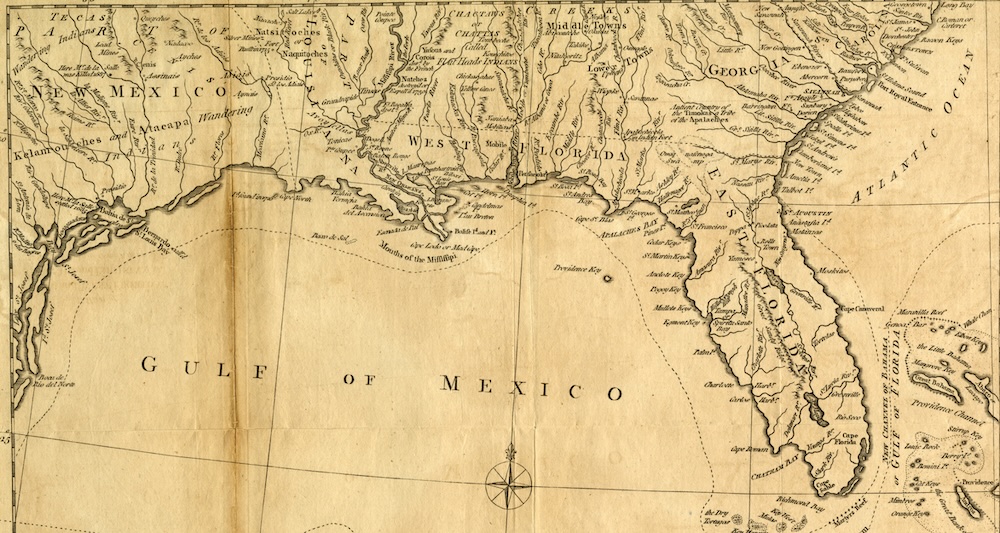
“Florida wasn’t just one colony, it was two: East Florida and West Florida,” said Erin Mauldin, the John Hope Franklin Chair of Southern History at USF St. Petersburg. “East and West Florida had only been established as British colonies in 1763 after more than 200 years of Spanish rule.”
In 1776, there was no Patriot uprising in East Florida’s capital of St. Augustine. And no independence movement swept through the West Florida capital of Pensacola.
Instead, Florida stayed loyal to Britain. Yet the fight to keep it a British colony during the American Revolution assisted the Patriot cause and helped shape a global war.
The Distinct Colony of Florida

“When the 13 colonies rebelled, why didn’t Florida?” said Mauldin.
For Mauldin, Florida’s Revolutionary story widens the familiar national narrative as the country marks the 250th anniversary of the Declaration of Independence.
“In 1775, at the start of the American Revolution, Britain had dozens of colonies stretching from Canada down to the Caribbean, and Florida was a crucial hinge between their mainland and island territories,” she said.
Unlike older colonies such as Massachusetts or Virginia, British Florida did not have the same long tradition of colonial assemblies and political autonomy. Many settlers were coming to Florida because of British land grants, British protection and British trade.
"Florida wasn’t like the 13 colonies because it was newer, more fragile and shaped by a completely different history,” she said.
Britain wanted Florida largely for strategic reasons. Having Spanish power directly below Georgia and South Carolina had long worried British officials. Florida also mattered because enslaved people had escaped from Georgia and South Carolina into Spanish Florida, and because the region offered access to the Gulf and Caribbean.
“For the Floridas, joining the 13 colonies' rebellion against the Crown would have been an enormous gamble,” Mauldin said. “The Floridas relied on British protection, and so most people saw the rebellion not as a chance for freedom, but as a serious risk to their survival.”
Florida’s economy also tied it to the empire. Plantations produced indigo, cotton and other cash crops for British markets, while West Florida was linked to the deerskin trade.
“Why would they rebel against a place that’s buying their deer skins?” Mauldin said.
The result is one of the central ironies of Florida’s Revolutionary history.
“During the Revolution, Florida became more British, not less,” she said.
As the war continued, Florida became a destination for loyalists fleeing the rebelling colonies. East Florida drew people who remained loyal to the Crown and moved south from places such as Georgia and South Carolina.
“As the closest colony to the rebelling 13, Florida became a refuge for loyalists who poured into, especially, East Florida over the course of the war,” Mauldin said. “By 1783, East Florida’s population had grown by over 400 percent.”
Florida’s Revolution also looked very different from the images many Americans associate with the war.
“The American Revolution in Florida didn’t look like Valley Forge or Yorktown, because Florida stayed loyal,” Mauldin said. “There was no big Patriot uprising or massive military campaigns.”
Instead, the war in the region involved raids, failed invasions, loyalist militias like the East Florida Rangers and civil conflict along the Gulf Coast. Indigenous allies, including Creek and Seminole peoples, helped Britain defend Florida and launch expeditions against neighboring Georgia.
A global war reaches Florida
“The greatest threat to the Floridas didn’t come from the Continentals; it came from Spain,” Mauldin said.
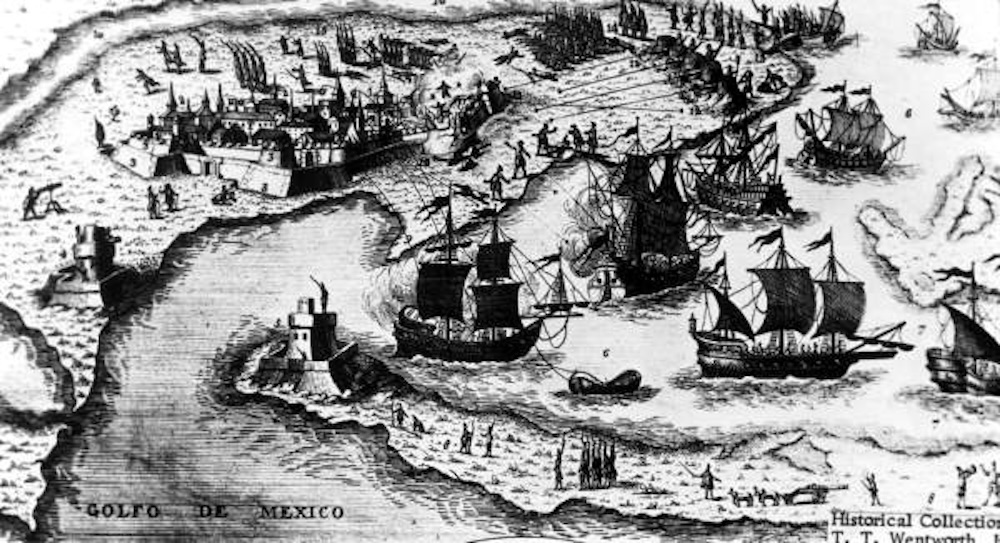
France entered the war against Britain in 1778. The next year, Spain entered the war, transforming the Mississippi River and Gulf Coast into a contested wartime borderland. From New Orleans, Spanish Governor Bernardo de Gálvez moved against British West Florida, while British leaders in Pensacola prepared to defend the colony.
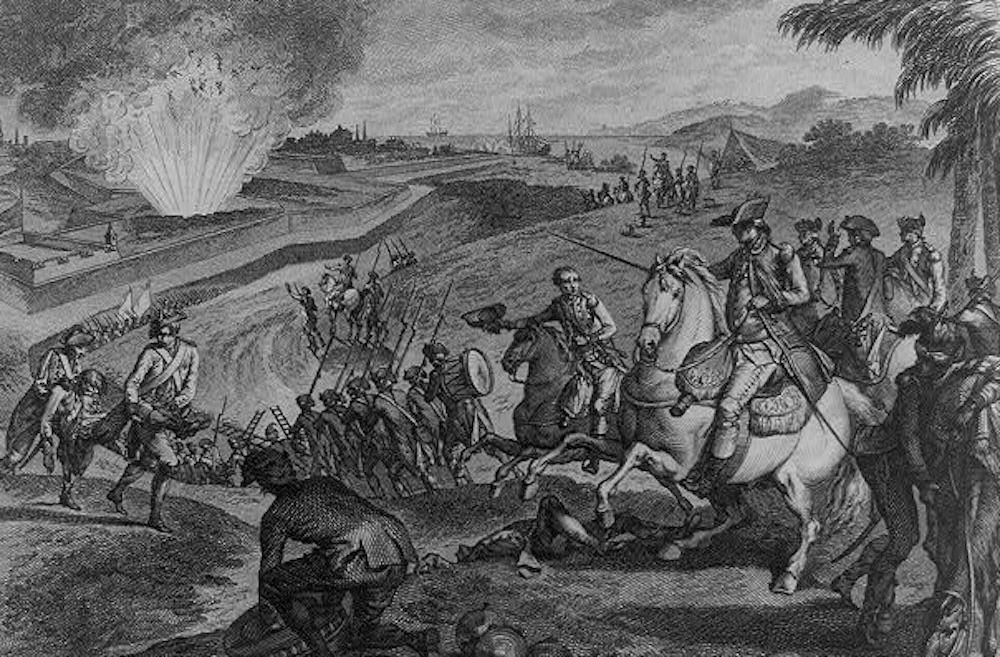
In 1781, Spanish forces from New Orleans attacked Pensacola, the capital of British West Florida. After weeks of siege fighting, a Spanish artillery strike would lead to a decisive blow and victory.
 This 1784 engraving depicts the Spanish seige of Pensacola, where Bernardo de Gálvez's
forces defeated the British and forced surrender of British West Florida in 1781. Credit: State Archives of Florida.
This 1784 engraving depicts the Spanish seige of Pensacola, where Bernardo de Gálvez's
forces defeated the British and forced surrender of British West Florida in 1781. Credit: State Archives of Florida.
“A Spanish artillery strike ignited a British powder magazine, blowing apart the defenses and forcing the British to surrender not just Pensacola, but the entire colony of West Florida,” she said.
The impact of that surrender reached far beyond Florida. After France and Spain entered the war, Britain was defending the 13 rebelling colonies in addition to their imperial interests in the Floridas, Caribbean, India, forts on the West African coast and even the British Isles where a French invasion was feared.
As the war widened, Britain had to spread its troops, supplies and attention across multiple fronts. Florida’s role, said Mauldin, helps show why the American Revolution was more than a fight for independence in the 13 colonies, but a part of a broader struggle between Britain, Spain and France.
“The Florida revolutionary story was a global one,” Mauldin said. “It was one of multiple fronts Britain had to defend, stretching resources and creating critical opportunities for Patriot successes.”